
How many of us like a puzzle of some sort?
It maybe a jigsaw puzzle, a sudoku, the Sunday crossword or even the good old Rubik’s cube! There must be a reason behind the rise in popularity of TV programmes like the 1% club, where we choose to watch something that makes our brains hurt, for the purposes of relaxing on a Saturday night! Or a daily fixation with Wordle and trying to beat the previous day’s score.
Here, we will look at the power of puzzles for not just children but ourselves and how the humble jigsaw puzzle and the like, are not just the pastimes of our elders, but something that can keep us all grounded and sane in this fast-paced world.
Now for the science…
Puzzles enhance brain function by triggering dopamine release with every success, which boosts mood, memory, and concentration- apparently!
When studying metacognition at my last school, I learnt a great deal about the power of training the brain to work in different ways, so a lot of this rings true.
Brain Flexibility: is where we exercise our brain like a muscle to work in different ways that it may not be used to and connect pieces that may not be easily linked.
Neural Pathway Strengthening: Repeatedly searching for colours, shapes, and patterns can be hugely beneficial in enhancing long term memory and cognitive speed.
Visuospatial Processing: Jigsaw puzzles specifically work on developing the visual and spatial awareness.
Prefrontal Cortex Activation: Logic-based puzzles (like Sudoku) heavily involve the areas of the brain which lend themselves to effective decision-making, and planning.
“Aha!” Moment: We all love to get to the point where we have achieved something – I like to call it ‘the light bulb moment’ or ‘the penny has dropped’ and this gives us real tangible feelings of success and allows us to feel validated intellectually.
Real research has been undertaken by a number of organisations on this area and Professor Graham Niblo from the University of Southampton, who works with puzzles and codebreaking shares his insight.
Professor Graham Niblo says, “the brain is not fixed, it is adaptable and responsive to challenge”.
Encourage a mix of puzzles… in the same was a gym has different machines to work different parts of the body.
Incorporating puzzles into the curriculum or daily life is a bit like planning your gym sessions – call it mental gymnastics! Trying a mix of puzzles keeps your brain on its toes. Prof Niblo says every puzzle has its own style, so building in a variety of puzzles will do you more good than sticking with the same one, done time and time again.
When considering ourselves and our children as learners, there are a range of puzzles to cater for different skills.
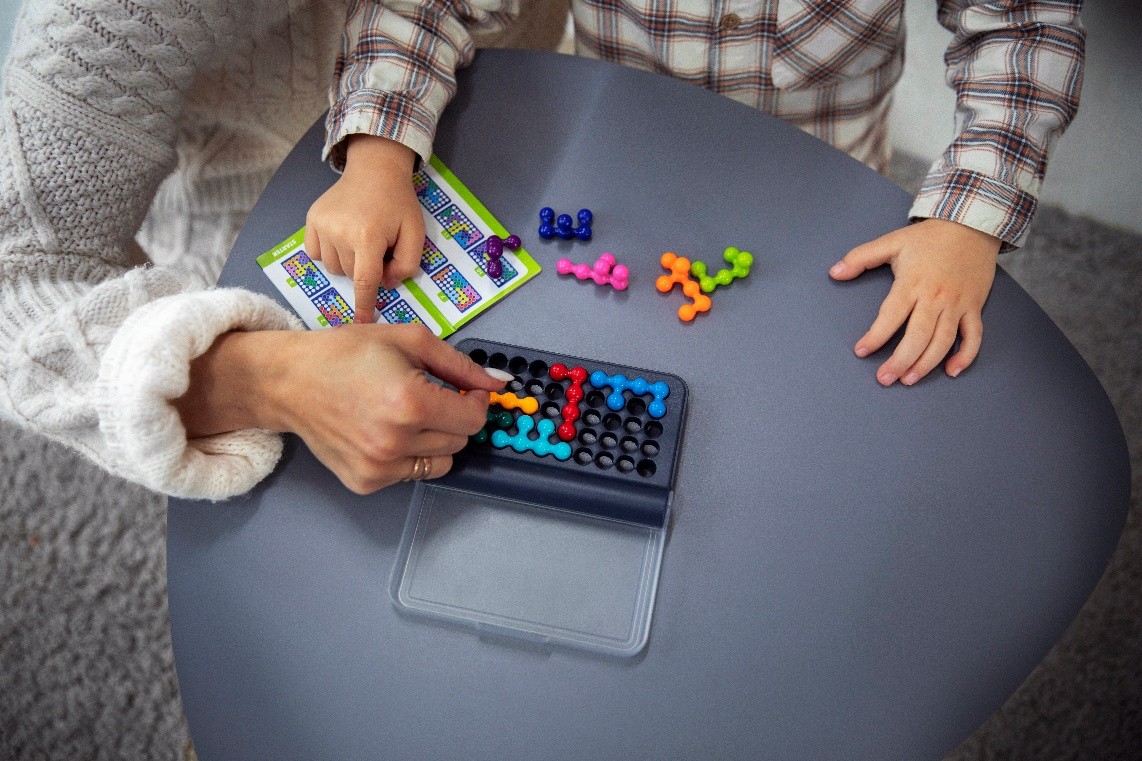
Logic puzzles strengthen reasoning for maths and science.
Word ones boost vocabulary and reading.
Visual ones help with diagrams or maps.
But the beauty of something like The 1% club is that it combines all 3 of these and from experience I know that my daughter excels at all 3 types, being surprisingly good on the word ones (even though she isn’t a reader and has a dyslexia diagnosis).
It is also worth noting that the established Stroop test, where you are given a word in a colour but you have to say the colour NOT the word eg:
BLUE at a fast pace, is an element that is part of the ADHD diagnostic test. Proof that there is some real evidence to show that our brains work differently.
Free Stroop Test – Stroop Effect Test Online | Focusaur
Incorporating puzzles into the classroom:
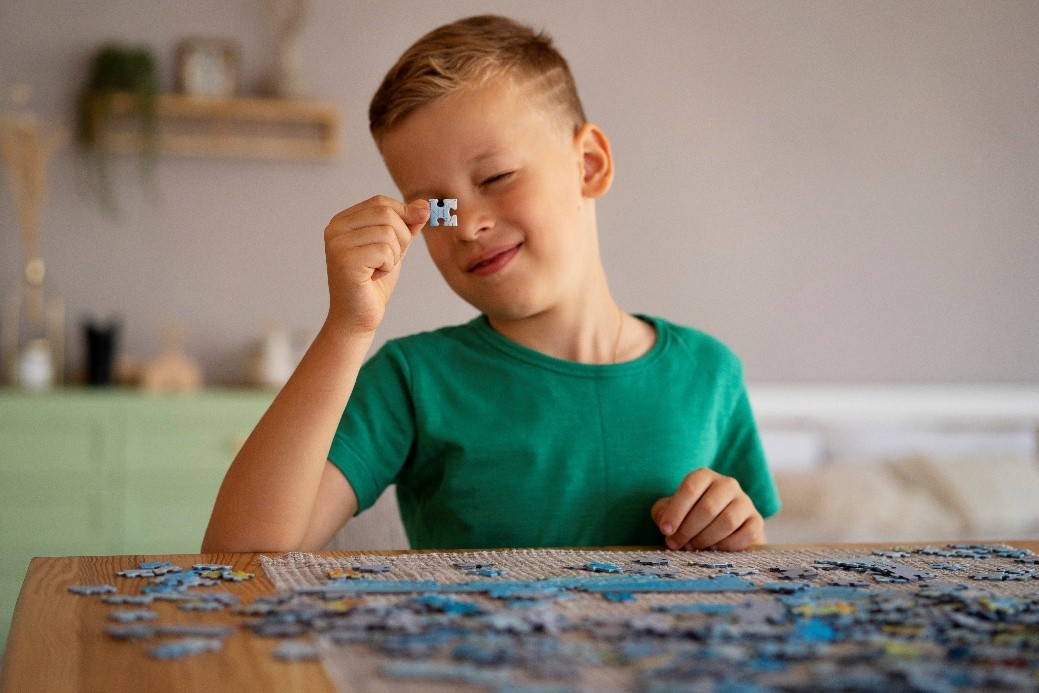
In my experience, children love this element of the day, and don’t view it as learning. It is almost a way to turn a wet break activity into something that can really develop their cognitive abilities in a fun and engaging way.
Practical ideas I have found worked in the classroom:
- Having a jigsaw puzzle on a spare table based on the theme of your topic eg: Ancient Greece etc. This can be accessed by any child when they have finished their work or when they need a ‘brain break’ and there is a real sense of working together to achieve something when it is done.
- Morning work when children arrive in class which is puzzle based to warm their brains up and get them focused. Include a mix and some element of choice in this to cater for all learners.
- Have free access to puzzle books for periods of free time.
- Build puzzles (such as Transum and Wordwall) into your planning, so they become a competent of your normal lessons.
- Make it explicit that some activities will train your brain to work better- I used the Stroop test prior to KS2 SATs to empower the children into thinking they were ‘doing their brains good’.
Useful games for use in the classroom:
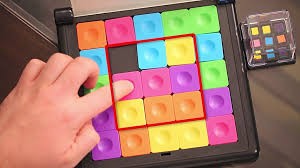
Square Up : My class loved this! You have to replicate the combination/ pattern that is shaken in the small box. Can be played on own or in pairs
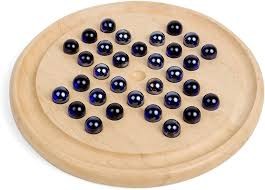
Marble solitaire: Most children like this one but I have found that in particular children who are neurodiverse, or need a calming moment, respond very well to this.
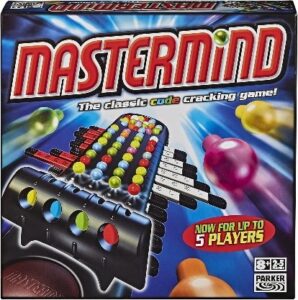
Mastermind board game: I had this myself as a child and it really challenged me as you have to think ahead, read the signals and predict a code. It is played in pairs and requires real concentration.
Blog written by Jo Gotheridge (10/2/26)

0 Comments