
June brings with it National Writing Day and we have signposted many useful resources in the Claire's staffroom section of our website.
Here we look at research which proves that writing by hand has many benefits over typing, in terms of memory retention and brain development.
Having embarked on writing creatively since leaving teaching, I returned to using a ‘nice’ pen and notebook, rather than heading straight for the laptop. There was something theraputic about the physical process of handwiting and I treasure those days of scrawling in my book. It wasn’t always neat – but somehow felt ‘real’.
So where do we sit with the balance of using writing and technology in our primary schools?
Case Studies: The power of handwritten words
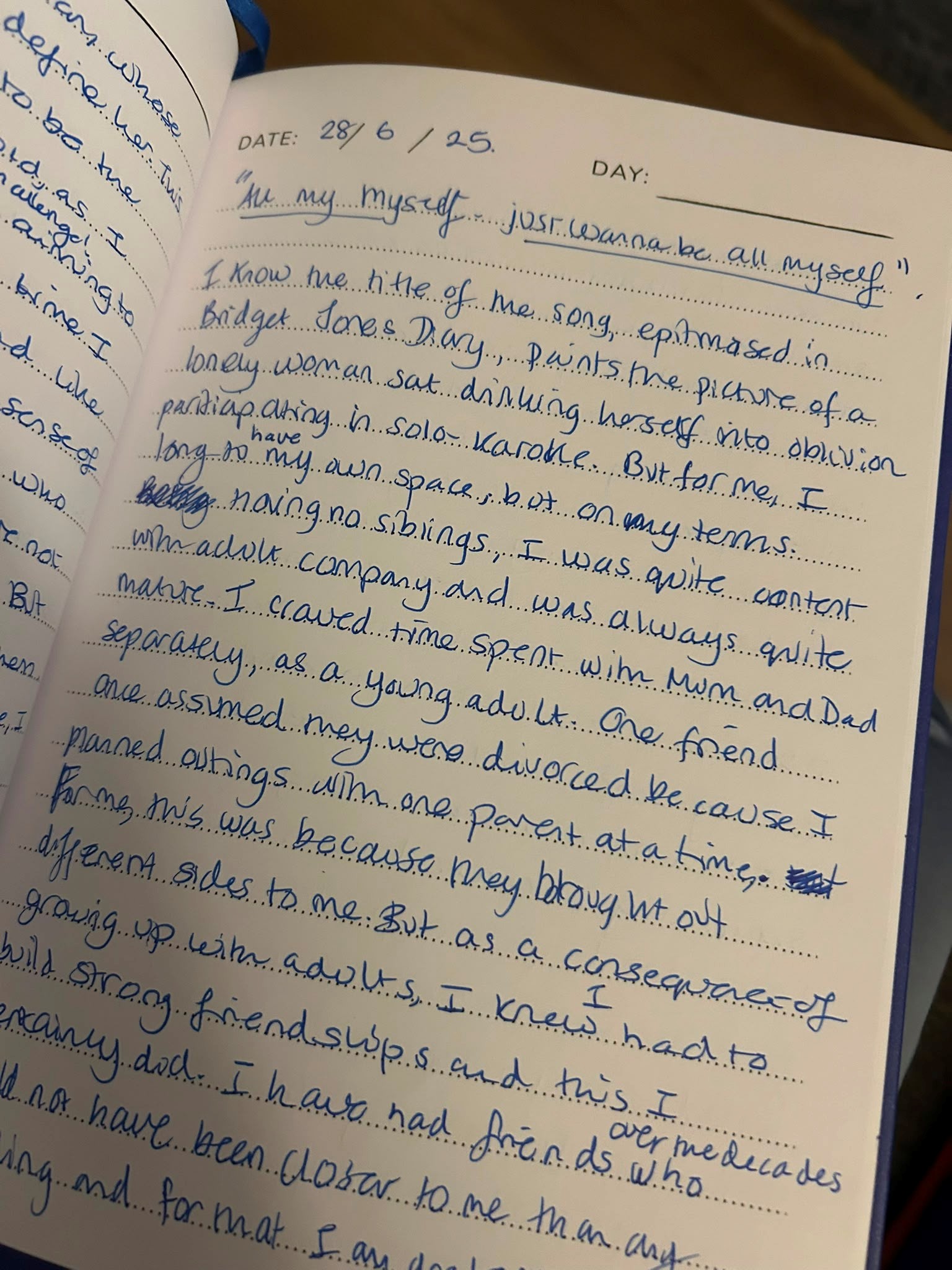
This is my ‘scrawl’ when writing my book. It felt like a vital part of the process to handwrite it before typing it to edit and submit to a publisher. Bizarrely the neatness of my writing varies according to my mood.
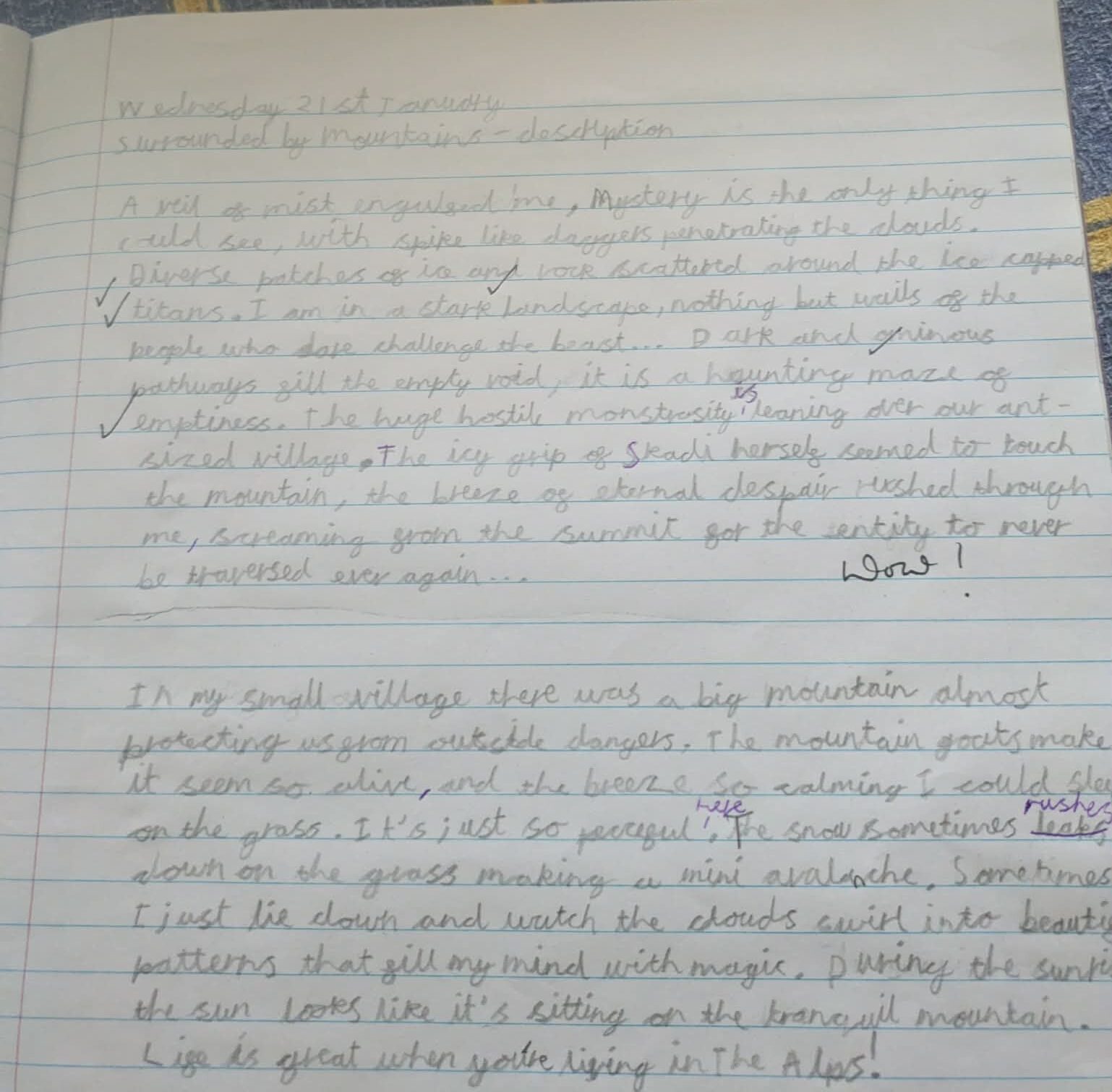
This is an ex-pupil’s writing in Year 6. Ellis chose this as a piece of writing HE was really proud of. It shows that to be a fluent writer, all elements have to ‘magically combine’ and imagination should never be compromised for presentation. It should be noted that he is, and always has been, a very fluent and enthusiastic reader.
Teachers and schools have prioritised a high standard of presentation and joined handwriting for years. I personally used to dread handwriting sessions, teaching them I mean. Don’t get me wrong, I valued highly a neat piece of work and had certain expectations, but depending on the particular handwriting scheme in the school and how its was taught from the start, by Y5 and 6, it could be an impossible mountain to climb to ‘magic’ up consistent, fluent, regular sized handwriting, whilst also concentrating on the content, grammar and composition.
But above all that, this blog looks at the science behind the manual practice of writing in terms of what then happens within the brain and how this is so crucial in terms of child development.
There has been extensive research completed on this area, but I will attempt to summarise it in as simple and condensed way that I can.
Research continues to suggest that taking notes the traditional way—with pen and paper or even stylus and tablet—is still the best way to learn, especially for young children.
In the current educational context, Last month, paediatric doctors warned that children were finding it difficult to hold pencils due to excessive use of technology. Letters to Santa are increasingly sent by email!
Firstly we look at a 2014 research project:
A Norwegian neuroscientist, Audrey van der Meer, spent 20 years proving that the act of writing by hand changes the human brain in ways typing physically cannot.
The sample of students were given words to write down on a screen in front of them. Their brain activity was monitored at the same time. When the students wrote by hand, the brain lit up everywhere at once. The entire brain network was being utilised and exercised.
When the same students typed the same word, their brains seemed to ‘go quiet’.
Same word, same brain, same person, and two completely reactions from the brain. It was found that the physical motion of writing using. wrist, fingers, eyes and brain, activated far more than tapping a keyboard would.
Blows your mind really doesn’t it? No pun intended.
The impact of writing on memory:
Other research has pointed to evidence that if children (or indeed adults) take on something said to them, if they draw, write or act that out, the process of ‘doing something different with it’ will increase the chances of remembering it. This leads us to why, as students, many of us sat in lecture theatre copiously taking frantically scribbled notes, scared of missing a vital nugget of information. The fact that when we make notes, we have to select WHAT to write down, means that it is more likely to linger in our minds than if we were typing it.
“Handwriting makes the brain work. Typing lets it coast. Typing never woke the part of the brain that would have made them stick.”
Justin Deschamps
The research also points out that children who have learned to read and write by using an Ipad “often have difficulty distinguishing letters that look a lot like each other or that are mirror images of each other, like the b and the d.”
Many scholars have found that children appear to learn better when they’re asked to produce letters using their fingers and hands in a coordinated way, eg: making letters in a sand tray in EYFS classrooms etc.
Ros Wilson, founder of Andrell Education’s Big Writing model for teaching writing, described the process of handwriting as “creating a mental picture of the world”.
So is there a place for tablets and keyboards, when ‘learning to write’?
Yadurshana Sivashankar looked at the place of technology and acknowledges that for using educational resources it has its place. However, if technology is overused – this is called ‘cognitve offloading’ and if children aren’t writing reguarly, their memory and motor skills will deteriorate dramatically.
Norway has been moving towards ‘entirely digital schools’ which I personally find quite frightening.
Imagine a world with no colouring pencils, chalks on the playground, or pen licenses!

Is there a difference between joined and non-joined handwriting in terms of brain development?
Handwriting can be cursive (joined-up writing) or block letters (non-joined writing). In terms of the impact this has on the brain, cursive writing is a more fluid motor activity, and involves greater activation of the motor cortex and cerebellum. This fluidity enhances memory retention and cognitive engagement, as the writer must anticipate the next letter without the pen coming off the paper. This is why there is a link between being a confident speller and using joined writing.
Other benefits of encouraging handwriting in children?
Studies have also shown that handwriting engages more areas of the brain associated with creativity and critical thinking. Whereas typing may develop further skills in brainstorming and rapid ideas.
Research shows that handwriting and reading share similar neural routes. You will probably see this connection in pupils you have taught?
The physical motion when handwriting contributes to visual and spatial awareness, fine motor skills, and hand-eye coordination. If children practise this fluid movement, it can have a positive impact on other areas such as playing a musical instrument and playing a sport.
Are improvements being made in attitudes to writing?
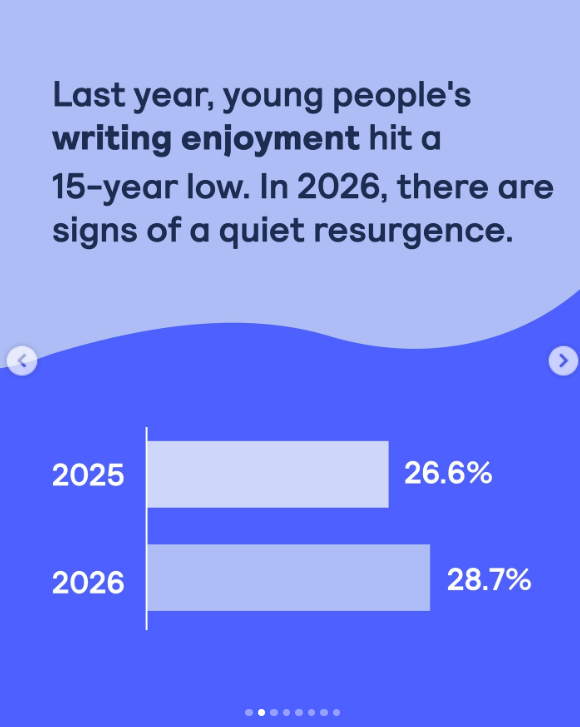
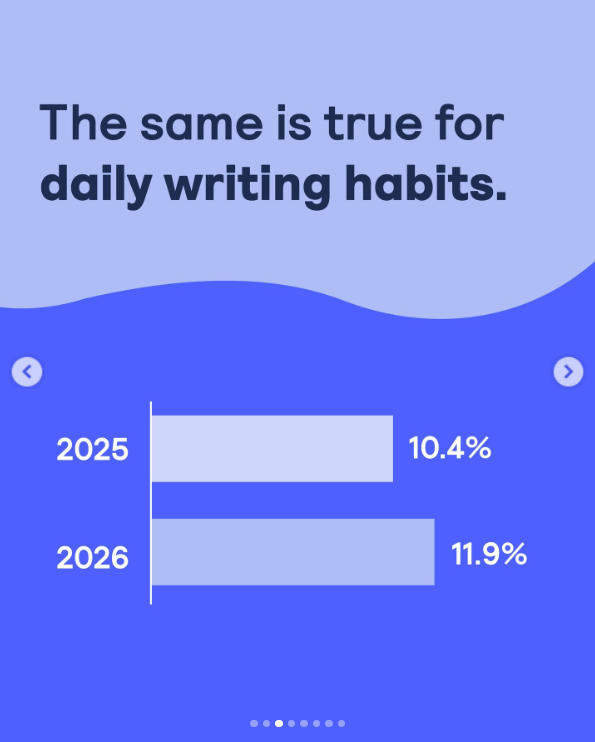
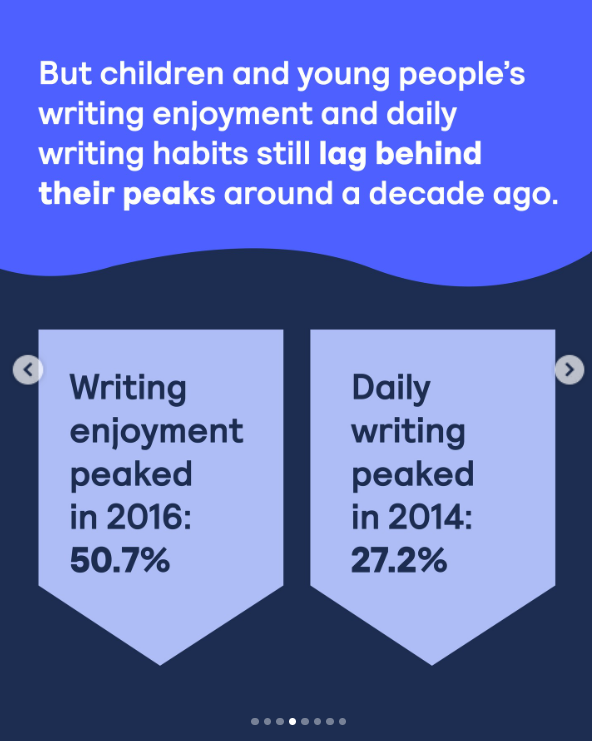
The National Literacy Trust recently published analysis of more than 55,000 children and young people’s open – ended responses highlighted the complexity of their relationship with writing.
(Bonafede & Clark, 2026)
The Annual Literacy Survey has continued to track children and young people’s writing engagement over time. Over the past decade, their research has revealed a steady and concerning decline. Since 2010, fewer children and young people have reported enjoying writing in their free time, while daily writing outside the classroom has become increasingly uncommon. By 2024 and 2025, both writing enjoyment and daily writing had reached their lowest recorded levels.
But they did find small shoots of hope from 2025 to 2026 as the results above illustrate.
What are other countries finding?
USA
More than 20 states in the US have made it mandatory to teach cursive writing to young students.
In 2025, Maureen Mulvaney, a teacher in Minneapolis, banned phones and laptops from her classroom. The results from September to February were astonishing as pupils who had struggled to write half a page by hand were now producing six or seven pages. Nearly 80 percent said it was easier to think clearly and organize ideas on paper than on a screen.
Denmark
In March 2026, Denmark banned use of smartphones and invested considerably in actual books.
Ways to make writing by hand 'fun'!

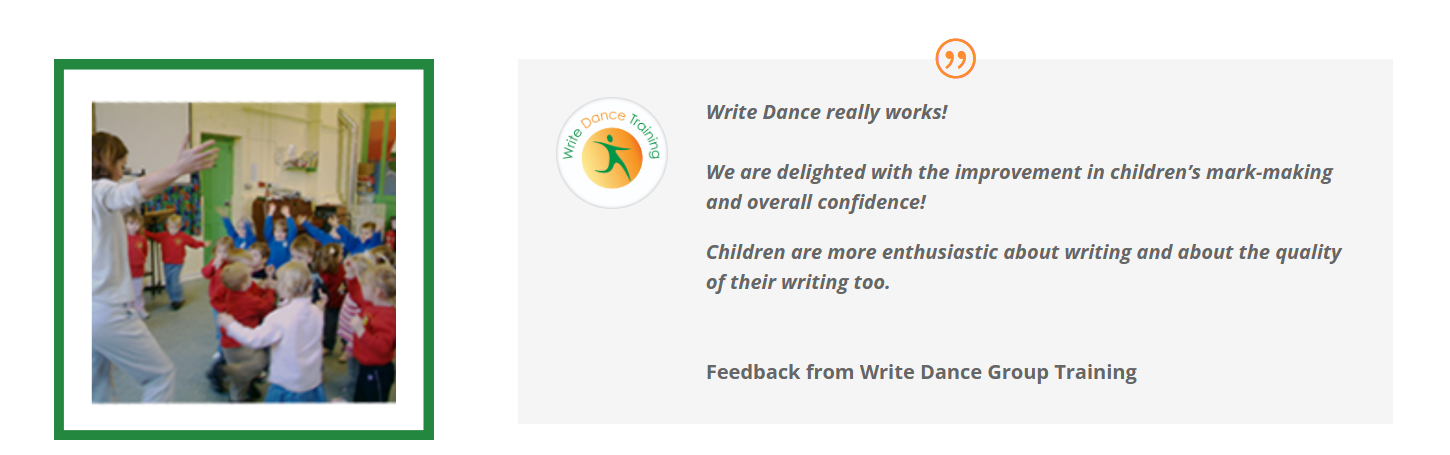
Disco Dough helps to strengthen children’s fine motor muscles to enable them to develop their pencil grip which in turn will help to develop their writing skills. But most of all it’s fun!
0 Comments