In this next installment of 'Navigating Neurodiversity', we look at how a local author used her own experiences to write a book which she hopes will help others.
Q: Please introduce yourself and how you came to write a book. Is this your first book?
A: Hi! I’m Em, aged 44 at the time of writing and publishing my book, and answering these questions. I’m married to Dan, and we have one daughter, a dog and a cat. I’ve written poetry since I was in my early teens, but have never in my adult life felt a need or desire to publish my work. However, having found myself out of paid employment for longer than I’d envisaged since the birth of my daughter 11 years ago, I’ve continually sought ways to use and develop my skills and abilities.
I’ve spent a lot of time in recent years researching and reading up on neurodiversity and parenting. I’ve always been incredibly grateful for those who have openly shared their personal experiences, and as someone who loves the written word, I’ve frequently felt supported and validated by reading others’ written words. The neurodivergent community is growing rapidly, and in raising and supporting my AuDHD daughter, I started to realise I had a lot more to express than I already had done – which I hoped might be supportive, validating, and a means of expression for other families in similar positions.
This is my first book that I’ve published to share with ‘the wider world’.
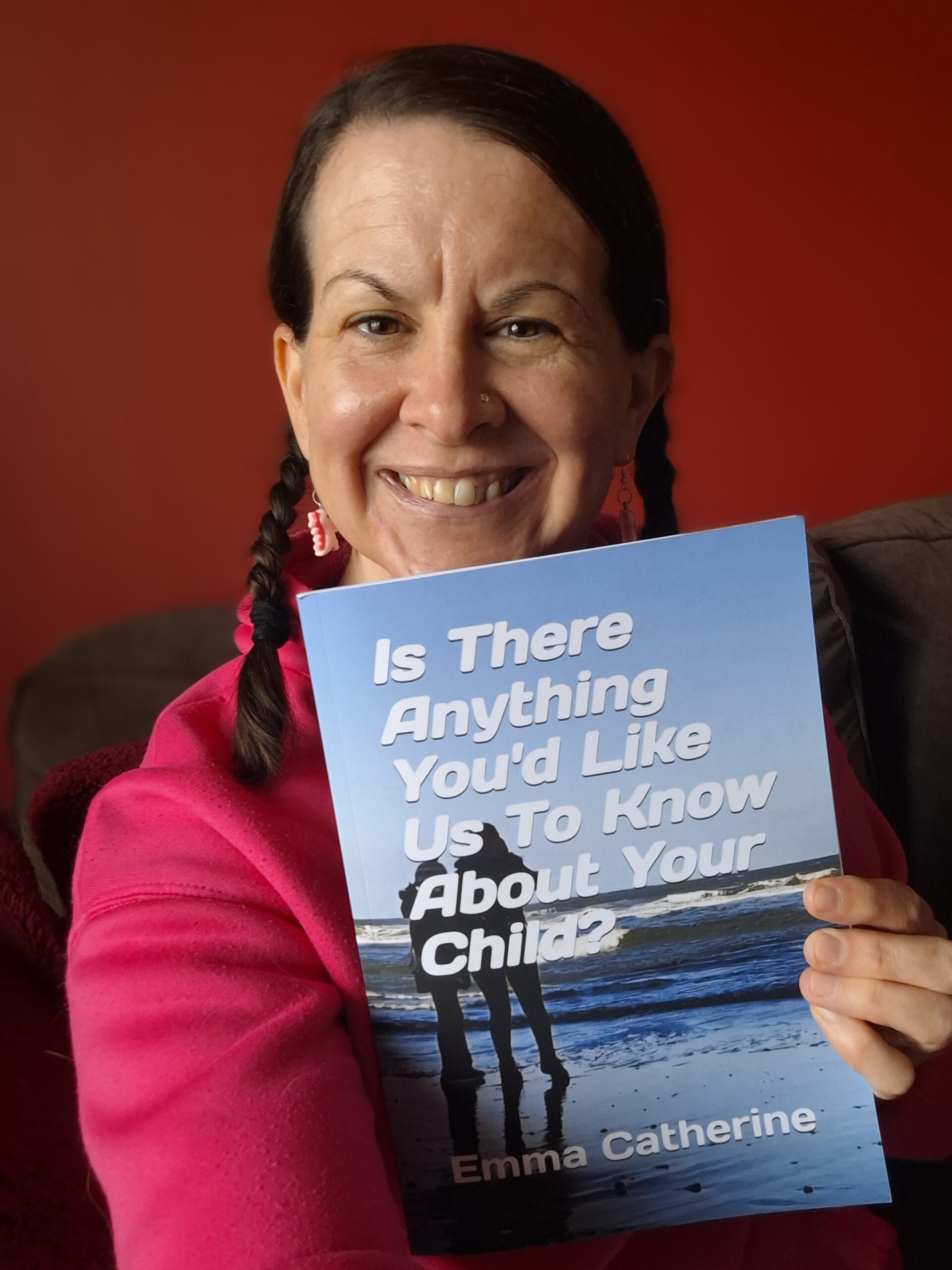
Q: Your book is titled ‘Is there anything you’d like us to know about your child?’ Why did you choose this title?
A: I wrote a poem in which I use this line repeatedly: it was a question asked of me when I was dropping my daughter off at a holiday club, and while I was grateful to be asked, it felt difficult to answer succinctly when there was SO much I wanted to have the space to say.
Once I’d decided to write a book, I knew this poem needed to be included, and I felt this line summed up the whole book.
Q: You decided to write poetry , is there a reason for this?
A: Although I used to write stories as a child – and a few as a teenager – poetry has always been a huge outlet and means of expression for me. I love the freedom of it; I love how even the most profound thoughts and feelings can be conveyed in a mere few lines.
This is one of the poems in the book by Em.
The ‘Why’
Why?
Why is it so important
To have a diagnosis?
Won’t that stigmatise her?
Because there’s freedom
In knowing the ‘why’
Certain unspoken rules confuse you;
There’s freedom in knowing the ‘why’
You feel everything so incredibly deeply;
There’s freedom in knowing the ‘why’
You so often struggle to put words to emotions –
in spite of your self-awareness and eloquence.
And then slowly but surely,
Instead of seeking to mould you into
Someone that you aren’t,
Society allows you to breathe,
To find your tribe,
And it’s like coming home,
Knowing instinctively that
You all speak the same language,
There’s no apologising,
There’s no explaining to do:
And she won’t spend all her adult years
Healing her inner child
Tending to her wounds
Apologising for who she is.
Q: Tell us about your experience with ADHD and how this led to the book.
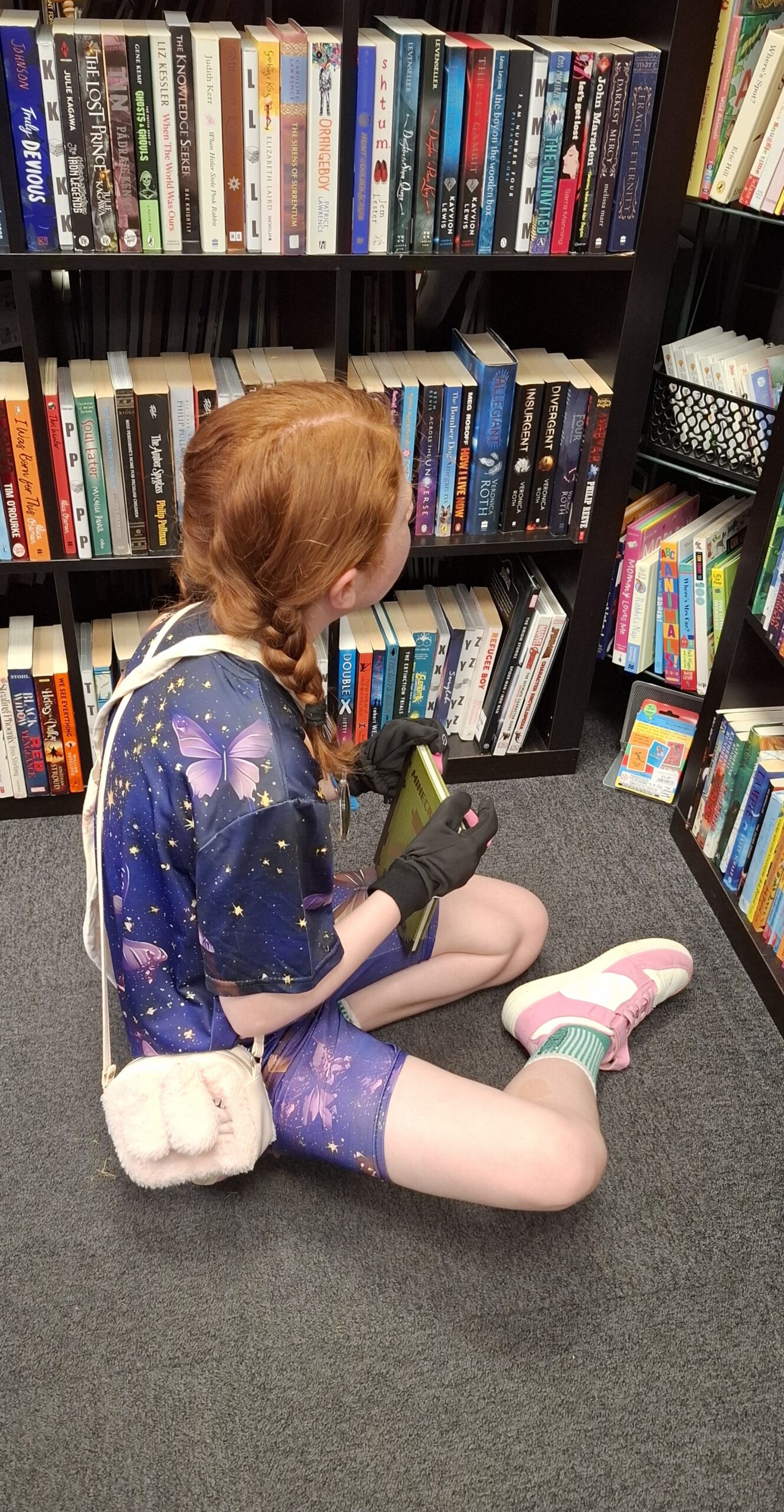
A: Like many of us, I’d previously understood ADHD to be the proverbial hyperactive boy bouncing off the classroom walls. I had to do a lot of research and largely self-taught learning to come to understand that my bright, quirky, talkative, lively, kind, empathetic, dreamy and seemingly disorganised, easily distracted daughter – who complied in school and never misbehaved – was another expression of ADHD. And of course, the presentation of autism combined with ADHD looks different to exclusive ADHD or autism – and no two people are the same; so while there’s plenty regarding this type of brain that we all need to continue to learn about, I could only write about my daughter’s experiences and her persona.
Q: What was / is the hardest thing about being a neurodiverse family?
A: Without a shadow of a doubt, it’s being dismissed and gaslit, particularly by those who clearly don’t understand autistic/ADHD masking. It’s made fighting for support for reasonable adjustments for my daughter IMMENSELY difficult – and that’s a massive understatement. I remain all the more grateful for those – both professionally and personally – who have taken the time to really get to know my daughter, who are curious rather than judgemental, and who seek to meet us where we are and support her/us.
Q: What have you learnt about being a mum of a neurodiverse daughter?
SO much! Obviously I can only speak based on my daughter personally, but I’ve learnt FAR more about ADHD, autism, and neurodiversity. I’ve learnt to stay curious and open-minded – to continually seek to educate myself – and, I would say, a less rigid way of seeing the world. I’ve learnt the importance of advocating for her, supporting her to advocate for herself, and how unquestionably VITAL it is to put her first, even when those outside of our immediate family may not agree or understand.
I’ve also learnt to ‘let go of the picture’ of what I anticipated life would look like, and the importance of finding joy and peace in the life that I’m/we’re living. Yes it’s different, yes the trajectory of my life has shifted, but that’s okay. My daughter has added a depth of richness and colour to my life (our lives) that I never could’ve predicted or foreseen, and I could not imagine life without her.
Q: What do you feel you want the book to achieve?
A: In the same way I so frequently find comfort, support and validation by reading others’ poetry and prose, I’d like my book to do the same for others.
I also hope it helps give others an insight into the autistic/ADHD brain, and a glimpse into one SEND family’s life. Unfortunately there are still some people in society who assume they know and understand why SEND/neurodivergent families make the choices that they do, rather than seeking to be curious and to understand. The dismissing and the gaslighting that so many endure is brutal.
Q: How has it been received? Any particular highpoints since publication?
A: I’ve been absolutely blown away! I’m INCREDIBLY grateful by so many people’s profoundly positive, uplifting and encouraging comments – and not all exclusively coming from those who know me very well, either. To see people sharing it on social media, complete with quotes that reveal how it’s helped put some of their experiences into words – and been a source of validation for them – really does mean SO much.
My daughter herself has been a massive source of encouragement for me; she even promoted it at her school, with a few of the staff purchasing it as a result! Her support means the absolute world.
Q: What is next for you writing wise?
A: I certainly hope to write another poetry book, but I’m not sure yet. Watch this space!
We certainly will look out for more writing from Em!
We thank her for being so honest about her experiences of being mum to a neurodivergent daughter and once again, it is lovely to feature people who have faced what could be a challenge, with positivity and creativity.
All part of our comittment to the National Year of Reading.
Blog written by Jo Gotheridge : 24/6/26
0 Comments