
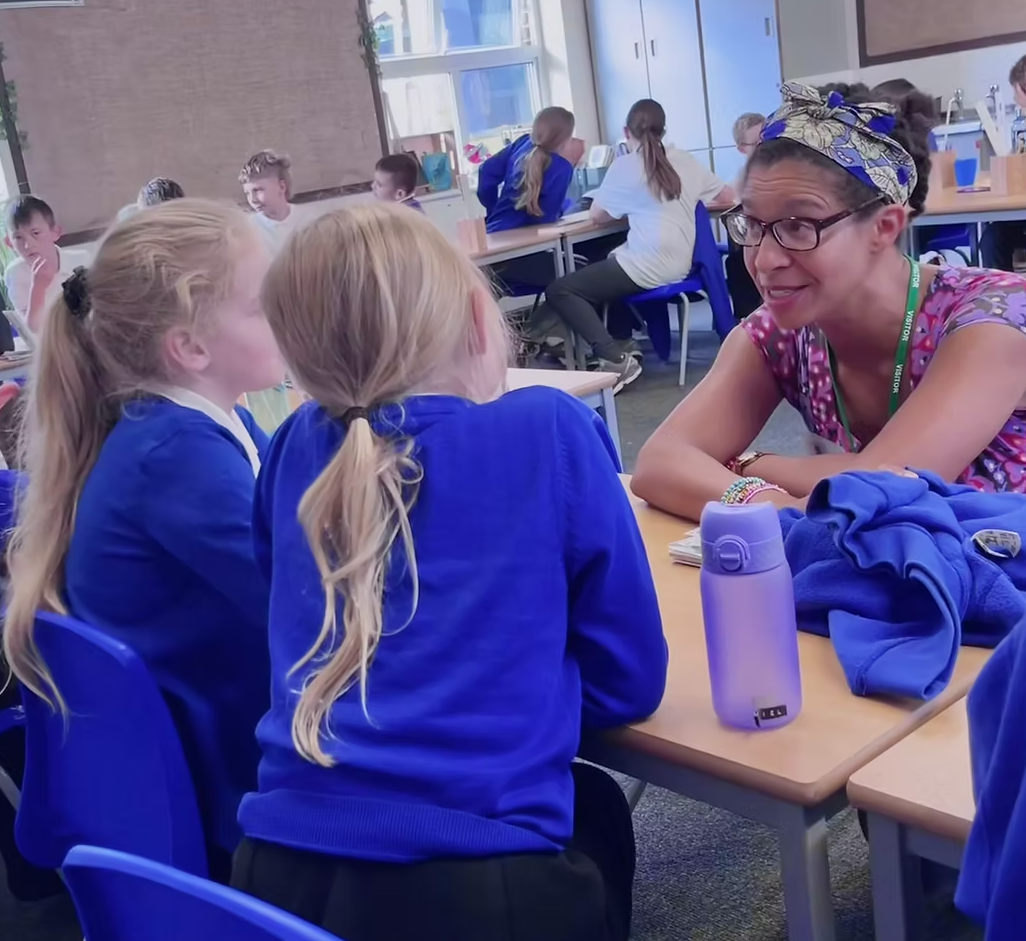
Clare Francis-Slater set up her own comany working with adults and children on promoting diversity through consultancy and workshops.
Here she explains to us her journey toward this and how enlightening it has been.
Tell me about your teaching experience prior to setting up your current business.
I have been teaching since 2001, starting off teaching English to adult and teenage refugees and asylum seekers in Gateshead. As part of this work, I also taught TEFL at nearby summer schools, The University of Durham and Newcastle University too. Then I trained to become a primary school teacher in 2004. My first full time teaching post was at a very popular primary school in Newcastle, (one of the largest, if not largest in the area). I taught there for 8 years, became head of PE and mentored NQTs (as they were then) ECTs, which I loved.
Since moving back to Derbyshire (home) with our young family, I have been teaching in a supply capacity for Claire’s School Solutions, which has been the perfect fit around family life – where I’ve been able to enjoy maintaining my teaching skills, earning an income but at the end of the day I can leave school at school!
What inspired or prompted you to concentrate on promoting diversity in the classroom?
I went through a post-traumatic growth experience, after my breast cancer diagnosis and treatment in 2018. Following my experience with cancer and a subsequent period of low mood, I received physiological support that helped me recover and as part of this process I dug deep and learned a lot about myself that I hadn’t been consciously aware of before. During this period of low mood, I experienced a significant loss of confidence, which I recognised was connected to my racial identity. As an individual of dual heritage, I felt particularly vulnerable and exposed. I decided to lean into this, explore my feelings and deepen my own positive relationship with my racial identity, as I realised it was not secure. Why wasn’t it secure? Growing up in all-white parts of Derbyshire, I never saw anyone like me in my village, school, or education. Moreover, due to the lack of diversity in the teaching/curriculum in the 1980s and 1990s, I had grown up with so many gaps in my knowledge about my racial identity, which ultimately affected my sense of belonging (although I had grown up here). And I reflected deeply on fundamental questions like:
Who am I?
How do I fit in to the story/history of Britain?
I taught myself so much and filled in my own gaps about Black (British) history. It was an amazing journey of exploration for me and learning about my ancestors was inspiring and empowering too. Learning about my own history strengthened me. I did not want other children to experience the lack of diversity within their education that I had.
Then George Floyd was murdered in America and the whole world was talking (what felt like for the first time in my lifetime – about racism) I found myself asking myself – what can I do to help make a positive difference? In 2020, I founded Diversity Days Everyday to support schools and other organizations in promoting diversity and inclusion.
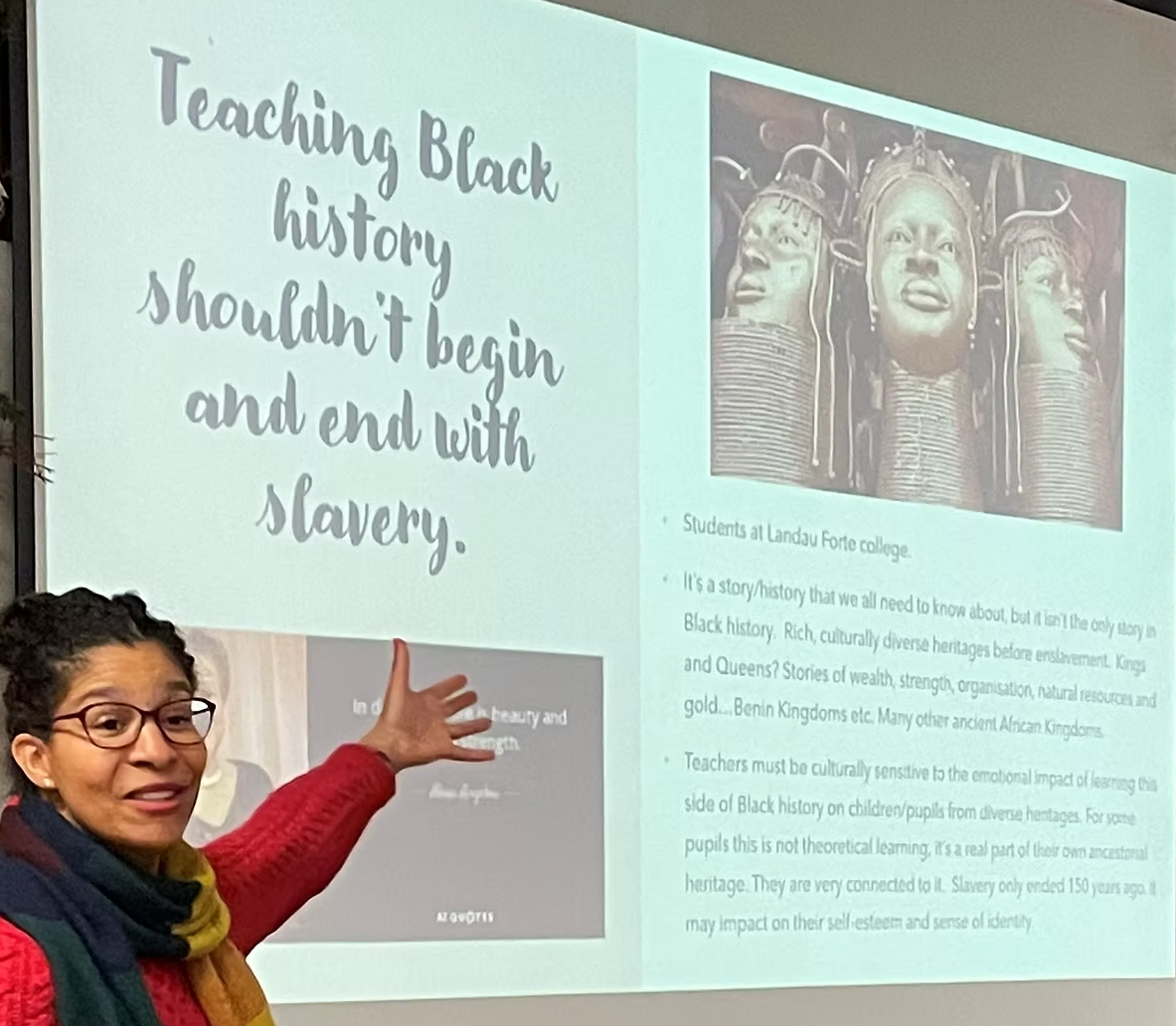
You work with children as young as 3 on diversity awareness, how does this look with children so young?
It looks like good nursery teaching – telling stories, using big images, using drama, and music where possible to get across messages of accepting who we are, celebrating our differences, being kind to one another no matter what people look like, that we are all equal and should be treated equally.
We look at how sometimes people can be unkind – and what do we do then? How to ‘stand up’ to unkindness/discrimination. Talk to a trusted adult about it.
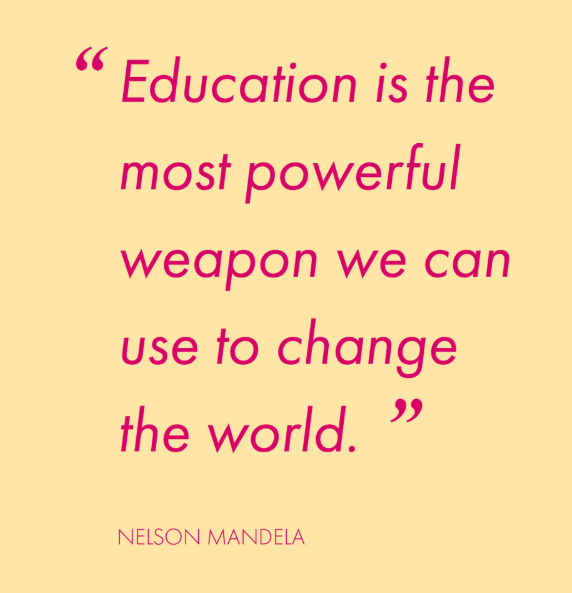
I love your quote from Nelson Mandela on your website, do you find that your training with adults has potentially a greater impact than working with children?
In some ways, as each adult I work with, then has the potential to impact their whole class of children/students, so maybe x30. They may also, (and I’ve often heard this happens) go home and speak to their families and their friends about what we’ve learned in the session and the ripple or butterfly effect can be huge – what I share gets cascaded within their circles of influence. And as teachers, it is important to remember that we are in important positions of authority and influence therefore education has the power to change the world, as Mandela said.
Have you had any ‘light bulb’ moments from the work you have done with children where you just know that they have understood?
I always find the children are super interested in learning about the work I do with them. I can tell from their body language, hands up, all looking and interacting with the subject matter – and it’s interesting talking about ‘race’.
It’s probably also because it’s an opportunity for them to discuss freely, ask questions and learn from someone who’s not fazed by questions about it. Research has shown that the vast majority of teachers haven’t been given any anti-racism training, lack subject knowledge and confidence in this area, so naturally would rather avoid teaching about anything to do with it. Parents often feel uneasy talking about issues related to ‘race,’ and as a society, we lack the language and experience needed to discuss it. As a result, these open conversations are frequently avoided or shut down. Schools can encourage children to discuss these topics as they are they are legally required to do. As part of the ‘Equalities Act 2010’, schools are required to promote racial equality.
Do you use any particular stories or people in your sessions that children seem to really identify with (when I was teaching, the pupils were really moved by the story of Rosa Parks)?
There are so many inspirational people from history that the children are interested in. Recently, as part of Black History Month assemblies, with this year’s theme of ‘Standing Firm in Power and Pride’ that I have delivered in schools, I have taught them about the life of Nelson Mandela. They are genuinely aghast to learn that he was put into prison for twenty-seven years for simply promoting equality. Their jaws literally drop open as they can see the injustice of it.
I see you have written a book. As a writer myself after years of teaching this fascinates me. Did you enjoy writing and do you plan to write any more books?
Congratulations to you for having your book accepted for publication! Wonderful news! My book was also about healing from mental health and how people can navigate a way to better understand themselves and improve their own mental wellbeing. I loved the process of writing my book, I found it a deeply cathartic experience. I also loved the thought that it may hopefully help others at a time when they are suffering. I’ve received positive feedback saying it’s helped many people.
Will I write another book? Never say never… I did enjoy writing it… and I do have a couple of other ideas that I have already made some notes on – both adults and children’s books, that I might like to write, based on things that I have experienced in life since then.
Have you received any opposition to your training at any point?
I wouldn’t say that I have received out and out direct confrontation or opposition to the work I do, but once or twice questions have been posed which to me makes me
think the work I’m doing ho
wever challenging, is so very needed. We need to have spaces to talk together, safely discuss topics, debunk myths (there are so many) to create better understanding, hopefully lessen divisions and support harmonious race relations.
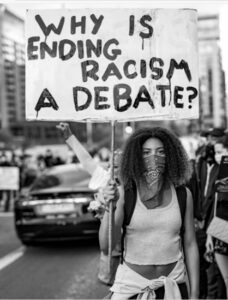
As a photograph from Misan Harriman’s recent exhibition says, ‘Why is ending racism still a debate?’ It’s an incredibly good question I think, that helps us to reframe the way we look at the problem of racism.
What would your ultimate aim be with the work you deliver?
My main goal is to create meaningful change by encouraging positive race relations in schools and businesses, both locally and across the country. I want to help these organisations integrate anti-racist practices into their daily routines so that such actions become standard and natural for everyone involved. I know this would help establish bridges between people not gulfs in order to build a more inclusive, kind, and united society for everyone’s benefit.

Blog written by Jo Gotheridge alongside Claire Francis-Slater (23/1/26)

0 Comments